

Here’s what we’re all about. After traveling roads too long to describe, we’ve come back to where most of us started and discovered this was where the project always needed to be.
In many ways, the coast is Oregon, and sums up much of what makes the state and region unique. At any rate, this is where our story belongs.
Oh, right; the story. To give everybody some idea of what we’ll be filming, here are two summaries. The first is called a log line (this will be on the midterm), and is sort of an elevator pitch: one sentence that describes the narrative. The longer one is a synopsis, with more detail, obviously. It also provides some substance, a notion of what’s behind the basic story and what drives it.
Authentic film terms provided by Dr. Ron’s Internet Film Class* . . .
The woman owner of a regional Oregon Coast newspaper weeks from bankruptcy reluctantly hires an enigmatic veteran Chicago newsman, he turns the drowning of a prominent local figure into a murder investigation, and nothing turns out to be as it seems.
A weekly newspaper owner, Janice Taylor, who also is editor and publisher, has bet everything on a move to combine hardcopy news with online coverage and actually serve her readership, rather than function as an advertising vehicle. A veteran and survivor of national-level print and broadcast news with front-line Gulf War experience, she has found professional renewal and a personal refuge in her commitment to local journalism. The paper, a struggling weekly on the Oregon coast, is a few of those struggling weeks from financial collapse, and her command appearance at a meeting with her bank coincides with a highly qualified senior Chicago reporter’s arrival for a scheduled interview. He’s used to making twice her salary, let alone what the new position offers, but he wants the job. She’s skeptical, but she needs the staff, even if it’s only for two more weeks.
Backing down isn’t part of her personality profile, so when her new hire senses homicide in an apparently commonplace but locally significant tragedy, they follow the hunch, despite pressure from several sides. Their pursuit of the story introduces a set of characters, future allies, whose diversity crosses every area. They’re talented, even gifted; occasionally flawed; and they cope with injuries that aren’t visible on the surface: war wounds, both military and domestic. Each has come looking for renewal in the traditional coastal life and culture that the full-time residents tenaciously keep alive in the face of change; they’ve stayed to defend it. They share a commitment, occasionally bordering on obsessive, to keeping the community and their unacknowledged sanctuary intact. Outsiders by nature or choice, their guardianship offers them an unexpected community, a fellowship of sorts.
The characters pursue stories that happen outside the tourists’ range of vision, or when they’re not around. Further tension emerges with the gradual intrusion of the violence and death from Thatcher’s recent and distant past and the details of his former wife’s homicide. He’d hoped to leave behind the complicated history that forced him out of Chicago, but increasingly it threatens to follow him.
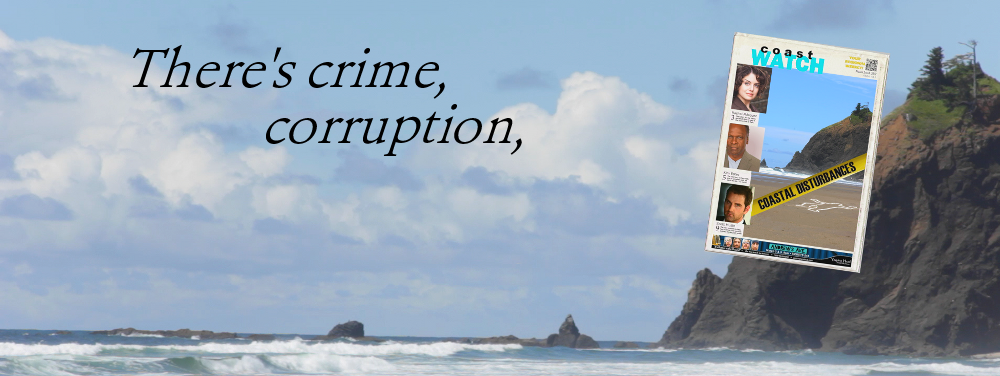
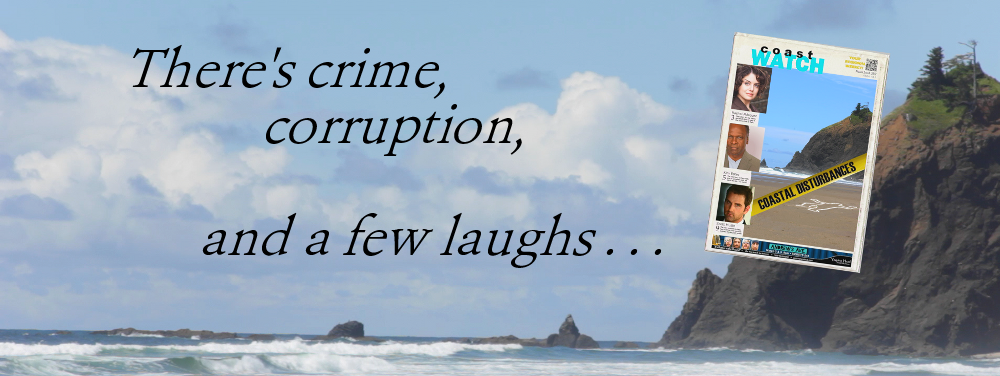
The pilot and the series will blend the down to earth casual, even familiar, grit-and-all realities of many Brit dramas with the pace and edge that we associate with the States. It’s crime, corruption, and a few laughs. Women characters occupy fundamental, pivotal roles, and the team that coalesces around Taylor and Thatcher is precisely that: a group of equals with distinct but overlapping skills. Characters in the series are Anglo, Native American, African American, Asian American, Hispanic, and include movement and functional challenges. There are no ethnic gags; there are no stereotypes.
More than simple backdrop, the Oregon coast emerges as a determining force, essentially as a distinct character. The unique setting and the culture it forms permeate the narrative. Rain and fog, as much as tourist-blue skies, set a range of moods that overlay the cliff’s-edge economy of fishing fleets, tenuous small businesses, professional artisans, and small-scale agriculture, as they coexist uneasily with a steady infiltration of pass-through industries, chain-owned resorts, and the urban influences, legal and otherwise, that accompany them.
*Dr. Ron’s Internet Film Class is entirely fictitious, fortunately for us all.